Less CO₂ with Heat Pumps: An Important Step Towards Fossil-Free Heating

Less CO₂ with Heat Pumps: An Important Step Towards Fossil-Free Heating
As the UK moves towards a low-carbon future, the way we heat our homes is becoming a key part of the transition. Around a fifth of the country’s greenhouse gas emissions come from heating buildings, most of which still rely on gas or oil. Heat pumps offer a cleaner, more efficient alternative that can significantly cut CO₂ emissions while keeping homes warm and comfortable.
How Heat Pumps Work
A heat pump works a bit like a refrigerator in reverse. Instead of removing heat from inside a fridge and releasing it outside, a heat pump extracts heat from the air, ground, or water outside and transfers it indoors. Even on cold days, there is enough energy in the environment for the system to capture and amplify for heating and hot water.
There are several main types of heat pumps:
- Air-to-air heat pumps, which deliver warm air directly into the home.
- Air-to-water heat pumps, which heat water for radiators, underfloor heating, and taps.
- Ground-source heat pumps, which draw heat from the stable temperature underground through buried pipes.
All types use electricity to power the process, but they typically produce three to four times more heat energy than the electricity they consume.
Læs også:
A Key Part of the Green Transition
As the UK’s electricity grid becomes greener, with more power coming from wind and solar, heat pumps become even more climate-friendly. Instead of burning gas or oil in each home, we can use renewable electricity to generate heat efficiently and cleanly.
According to the UK Department for Energy Security and Net Zero, switching from a gas boiler to a heat pump can reduce a household’s carbon emissions by up to 65 percent, depending on the home’s insulation and the type of system installed. In addition, heat pumps eliminate the need for fuel deliveries and reduce local air pollution.
Heat pumps are therefore not just a technical upgrade – they are a cornerstone of a more flexible and sustainable energy system.
Costs and Support Schemes
Installing a heat pump requires an upfront investment, but the running costs are generally lower than those of oil or LPG systems, and comparable to gas when combined with good insulation. To help with the initial cost, the UK government offers financial support through the Boiler Upgrade Scheme, which provides grants of up to £7,500 for eligible installations in England and Wales. Scotland and Northern Ireland have similar programmes to encourage low-carbon heating.
Energy suppliers and local authorities also offer advice and sometimes additional incentives, making it worthwhile to explore the available options before deciding on a system.
Shared and Community Solutions
Beyond individual homes, shared heat pump systems are gaining attention in new housing developments and rural communities. These systems use a central heat pump to supply several homes through a local heat network – a smaller-scale version of district heating. Such collective solutions can help phase out fossil fuels in areas where extending the gas grid or building large-scale district heating is not practical.
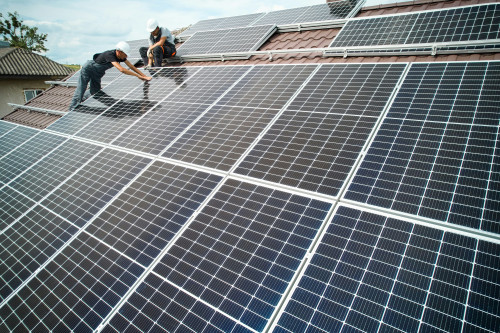
Community energy projects that combine shared heat pumps with local renewable generation, such as solar panels, are already showing promising results across the UK.
The Future of Heating
Heat pumps are not the only answer to decarbonising heat, but they are one of the most effective and readily available technologies today. When combined with improved insulation, smart controls, and renewable electricity, they can bring the UK much closer to its goal of net zero emissions by 2050.
For homeowners, choosing a heat pump means lower carbon emissions, reduced dependence on fossil fuels, and often a more consistent and comfortable indoor climate.
Installing a heat pump is therefore more than a practical decision – it is a commitment to a cleaner, more sustainable future.
Læs også: